Showing posts with label Eliphas Levi. Show all posts

Friday, February 3, 2012

Imagination's Real (God In My Brain) -- For D.D. at 65


Magic, being the science of universalequilibrium, and having the truth, realityand reason of being for its absoluteprinciple, accounts for all the antimoniesand reconciles all actualities which are inconflict with one another by the onegenerating principle of every synthesis –that harmony results from the analogy of opposites.  


For the initiate of this science religion is not in doubt because it exists, and we do not deny what is.  Being is being. The apparent opposition of religion andreason is the strength of both, establishing each in its distinct domain and fructifying the negative side of each by the positive side of the other : as we have just said, it is the attainment of agreement by the correspondenceof things that are contrary.  The cause of allreligious errors and confusions is that inignorance of this great law, it has beensought to make religion a philosophy andphilosophy in its turn a religion.


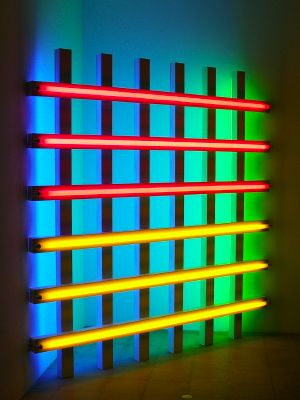
Sculptures:  Dan Flavin


Text:  Eliphas Levi (Alphonse Louis Constant), The Historyof Magic

Tuesday, November 22, 2011

Magic: My Fear Is For Those Who Fear Him (Eliphas Levi)


      For a great number of readers Magic is the science of thedevil – even as the science of light is identified with that of darkness.  We confess boldly at the outset that we arenot in terror of the devil.   “My fear is for those who fear him,” said St.Teresa.  But we testify also that he doesnot prompt our laughter and that the ridicule of which he is often the objectseems to us exceedingly misplaced. However this may be, it is our intention to bring him before the lightof science.  But the devil and science –the apposition of two names so strangely incongruous – must seem to havedisclosed the whole intent in view.  Ifthe mystic personification of darkness be thus dragged into the light, is itnot to annihilate the phantom of falsehood in the presence of truth? Is it not to dispel in the day all formlessmonsters of the night? Superficialpersons will think so and will condemn without hearing.  Ill-instructed Christians will conclude thatwe are sapping the fundamental dogma of their ethics by decrying hell; andothers will question the utility of combating error in which, as they imagine, noone believes longer.  It is, therefore,important to enunciate our object clearly and establish our principles solidly.


      We say, therefore, to Christians that the author of thisbook is a Christian like yourselves.  Hisfaith is that of a catholic strongly and deeply convinced; for this reason hedoes not come forward to deny dogmas, but to combat impiety under its most perniciousforms, which are those of false belief and superstition.  He comes to drag from the darkness the blacksuccessor of Ahriman, in order to expose in broad day his colossal impotenceand redoubtable misery.  He comes to makesubject the  age-long problem of evil to the solutions of science, touncrown the king of hell and bow down his head at the foot of the cross.  Is it not virginal and maternal science --that science of which Mary is the sweet and luminous image – destined like herto crush the head of the old serpent?


NOTE:  I greatly enjoy reading Eliphas Levi's History of Magic in the kinetic A.E. Waite translation, but I would like to say that I object to the image of crushing "the head of the old serpent."  There are many serpents I like and admire.  Leave serpents alone.  There are enough human malefactors about.

Sunday, October 16, 2011

Rothko Sunday (Paracelsus 3)


           Of such were the secrets known by Paracelsus, and it was inthe application of these hidden natural forces to purposes of medicine that hemade at once so many admirers and enemies. For the rest, he was by no means a simple personality like Postel;  he was naturally aggressive and of themountebank type; so did he affirm that his familiar spirit was hidden in thepommel of his great sword, and never left his side.  His life was an unceasing struggle; hetravelled, debated, wrote, taught.  Hewas more eager about physical results than moral conquests, and while first amongpractical magicians he was last among adepts of wisdom.  

           His philosophy was one of sagacity and, onhis own part, he termed it philosophiasagax. [1]   He divined more thananyone without knowing anything completely. There is nothing to equal his intuitions, unless it  be the rashness of his commentaries.   He was a man of intrepid experiences,intoxicated with his own opinions, his own talk, intoxicated otherwise onoccasion, if we may believe some of his biographers.  The works which he has left are precious forscience, but they must be read with caution. He may be called the divine Paracelsus, understood in the sense ofdiviner; he is an oracle, but not a true master.  He is great above all as a physician, for hehad found the Universal Medicine.   

          Thisnotwithstanding, he could not prolong his own life, and he died, while stillyoung, worn out by work and by excesses. [2]   He left behind him a name shining with fantastic and ambiguousglory, due to discoveries by which his contemporaries failed to profit.  He had not uttered his last word, and is one of those mysterious beings of whom it may be said, as of Enoch and St.John:  He is not dead, and he will comeagain upon earth before his last day.

[1]  This is reallythe title of a particular treatise, but it is exceedingly long and may be saidto be de omnibus rebus, it may be nottaken unjustly to represent his philosophy at large.

[2]  The latest andmost successful apologist of Paracelsus says that the charge of intemperancewas invented by his enemies.  See the Life of Paracelsus, by Miss Anna M.Stoddart, 1911.


Eliphas Levi, The History of Magic (Including A Clear And Precise Exposition Of Its Procedure, Its Rites And Its Mysteries), 1860 (translated by A.E. Waite, 1913). Float.  Serene.  Occupy.

Saturday, October 15, 2011

Paracelsus 2: Palingenesis (The Jugglers)


John Gautz, Man Levitating, 1820


        "At Baroche,” says the estimable traveller Tavernier, [1]“there is a first-class English house, which I reached on a certain day withthe English president, on my way from Agra to Surat.  There came also certain jugglers, askingleave to exhibit some of their professional skill, and the president wascurious to see it.  In the first placethey lighted a great fire, at which they heated iron chains, then wound themaround their bodies and pretended that they were suffering in consequence, butno harm followed.   They next took amorsel of wood, set it in the ground and asked one of the spectators to choosewhat fruit he liked.  His choice fellupon mangoes, and thereupon one of the performers put a shroud about him andsquatted on the ground five or six times. I had the curiosity to ascend to an upper room, where I could seethrough a fold in the sheet what was being done by the man.  He was actually cutting the flesh under thearmpits with a razor, and rubbing the wood with his blood.  Each time he rose up the wood grewvisibly;  on the third occasion therewere branches and buds thereon, on the fourth the tree was covered with leaves,and on the fifth it was bearing flowers.


Howard Thurston theatrical poster, early 20th century


        The Englishpresident had brought his chaplain Amadabat to baptise the child of the Dutchcommander, the president acting as godfather. The Dutch, it should be mentioned, do not have chaplains except wheresoldiers and merchants are gathered together. The English clergyman began by protesting that he could not consent toChristians assisting at such spectacles, and when he saw how the performersbrought from a bit of dry wood, in less than half an hour, a tree of four orfive feet in height, having leaves and flowers as in springtime, he felt it hisduty to put an end to the business.  Heannounced therefore that he would not administer communion to those whopersisted in witnessing such occurrences. The president was thus compelled to dismiss the jugglers."


Hindu Jugglers, 1822


      Dr.  Clever de Maldigny [2], to whom we owe thisextract, regrets that the growth of the mangoes was thus stopped abruptly, buthe does not explain the occurrence.  Toour mind it was a case of fascination by the magnetism of the radiant light ofblood, a phenomenon of magnetised electricity, identical with that termedpalingenesis (παλιγγενεσια), by which a living plant is made to appear in a vessel containingashes of the same plant long since perished.


Ramo Samee, the most famous Indian juggler, performing at the Royal Coburg Theater (later the Old Vic), London, 1822. ("Is it then a trifling power we see at work, or is it not something next to miraculous! It is the utmost stretch of human ingenuity." William Hazlitt on Ramo Samee: from The Indian Jugglers in Table Talk, 1828 (link))


[1]   From:  Les Six Voyages de Jean-Baptiste Tavernier, enTurque, en Perse et aux Indes, Paris, 1676.


[2]  Source not cited by E. Levi. However, the Baron de Maldigny, a surgeon in the Royal Guards of France, is known for  successfully performing a lithotomy on himself before a mirror, thus relieving himself of excruciating pain. This achievement is cited in Dr. Leonard J.T. Murphy's article Self-Performed Operations for Stone in the Bladder, British Journal of Urology, Vol. 41, October 1969,  pp. 515-29.


 Jean-Baptiste Tavernier in Oriental Costume, 1679


 Sparrows in a mango tree, Jaipur


Eliphas Levi, The History of Magic (Including A Clear And Precise Exposition Of Its Procedure, Its Rites And Its Mysteries), 1860 (translated by A.E. Waite, 1913)

Wednesday, October 12, 2011

Paracelsus (From Eliphas Levi -- The History Of Magic)


Quentin Massys, Portrait of Paracelsus, 1528, Oil on panel, Louvre, Paris 


        Let us pass toanother maniac who was called Theophrastus Aureolus Bombast and was known inthe World of Magic under the famous name of Paracelsus. [1]  


Let both the said pieces of Money beengraven only on one side, in the hour of the said conjunction of Mercury andMars; and let them be so kept, that they touch not one another. Theright-hand Lamen (or coin, medallion) seems to represent Mars piercingVenus.


       There is no need to recapitulate what hasbeen said concerning this master in our Doctrine and Ritual of TranscendentalMagic, but something may be added on the occult medicine restored byParacelsus.  This truly universalmedicine is based on a spacious theory of light, called by adepts fluid orpotable gold.


Potable Gold


       Light, that creativeagent, the vibrations of which are the movement and light of all things; light,latent in the universal ether, radiating about absorbing centres, which, beingsaturated thereby, project movement and light in their turn, so formingcreative currents; light, astralised in the stars, animalized in animals, humanizedin human beings; light, which vegetates in plants, glistens in metals, producesall forms of nature and equilibrates all by the laws of universal sympathy –this is that light which exhibits the phenomena of magnetism, divined byParacelsus, which tinctures the blood, being released from the air as it isinhaled and discharged by the hermetic bellows of the lungs.


"The stubble on my chin knows more than you and all your scribes, my shoe buckles are more learned than your Galen and Avicenna, and my beard has more experience than all your high colleges!"  

-- Paracelsus, Der grossen Wundartzney (The Great Surgery), Augsburg, 1536. (Roderick Bowen Library and Archives, University of Wales).


       The blood then becomes a true elixir of life,wherein ruby and magnetic globules of vital light float in a slightly gildedfluid. These globules are actual seeds, ready to assume all forms of that worldwhereof the human body is an abridgement. They can become rarefied and coagulated, so renewing the humours whichcirculate in the nerves and in the flesh encompassing the bones.  They radiate outside, or rather, inrarefying, they are drawn by the currents of light and circulate in the astralbody – that interior and luminous body which is dilated by the imagination of ecstatic,so that their blood sometimes colours objects at a distance when these havebeen penetrated and identified with the astral body.  


       In a special work on occult medicine thatwhich is stated here will be proved, however strange and paradoxical it mayseem at first sight to men of science. Such were the bases of medicine as put forward by Paracelsus.


-- Eliphas Levi, The History of Magic (Including A Clear And Precise Exposition Of Its Procedure, Its Rites And Its Mysteries), 1860 (translated by A.E. Waite, 1913)


[1]  Paracelsus (born Philippus Aureolus Theophrastus Bombastus von Hohenheim, 11 November or 17 December 1493 – 24 September 1541) was a Swiss Renaissance physician, botanist, alchemist, astrologer, and general occultist.  "Paracelsus," meaning "equal to or greater than Celsus," refers to the Roman encyclopedist Aulus Cornelius Celsus from the 1st century, known for his tract on medicine. He is also credited for giving zinc its name, calling it zincum, and is regarded as the first systematic botanist.


Wednesday, April 6, 2011

Magic 3: The Magical Origin of Freemasonry (E. Levi; A.E. Waite)


Eliphas Levi (Alphonse Louis Constant) in 1878 


        That great Kabalistical association known in Europe under the name of Masonry appeared suddenly in the world when revolt against the Church had just succeeded in dismembering Christian unity.  The historians of the Order are one and all in a difficulty when seeking to explain its origin.  


Eliphas Levi (Alphonse Louis Constant) in 1848  


        According to one, it derived from a certain guild of Masons who were incorporated for the construction of the cathedral of Strasburg.   Others refer its foundation to Cromwell, without pausing to consider whether the Rites of English Masonry in the days of the Protector were not more probably developed as a counterblast to this leader of Puritanical anarchy.  In fine, some are so ignorant that they attribute to the Jesuits the maintenance and direction, if not indeed the invention, of a society long preserved in secret and always wrapped in mystery (1). 


Strasbourg Cathedral, constructed 1015-1439; from 1647-1874, the world's tallest building.


Pulpit at Strasbourg Cathedral attracting a ray of green light, 2009


        Setting aside this last view, which refutes itself, we can reconcile the others by admitting that the Masonic Brethren borrowed their name and some emblems of their art from the builders of Strasburg cathedral, and that their first public manifestation took place in England, owing to radical institutions and in spite of Cromwell’s despotism.   It may be added that the Templars were their models, the Rosicrucians their immediate progenitors (2), and the Johannite sectarians their more remote ancestors. 


Arthur Edward Waite, co-creator of the Rider-Waite Tarot deck, author of its companion volume, the Key to the Tarot, and translator and annotator of Eliphas Levi's The History of Magic, in early adulthood (date and photographer unknown).


        Their doctrine is that of Zoroaster and of Hermes, their law is progressive initiation, their principle is equality – regulated by the hierarchy and universal fraternity.  They are successors of the school of Alexandria, as of all antique initiations, custodians of the secrets of the Apocalypse and the Zohar. Truth is the object of their worship and they represent truth as light;  they tolerate all forms of faith, profess one philosophy, seek truth only, teach reality, and their plan is to lead all human intelligence by gradual steps into the domain of reason.


Arthur Edward Waite in 1915.  Photographic portrait by E.O. Hoppe*.


NOTES BY ARTHUR EDWARD WAITE


(     (1) This remark, in which I concur unreservedly, may be noted by students of Masonic history as an offset against the pretentious nonsense which has been talked on the subject by French makers of fable and especially J.M. Ragon**, the dullest and most imbecile of all.
      
              (2) This opinion is showing signs of recrudescence at the present day, and it is well to say that there is no evidence to support it.   

       ACravan Notes:    

 *  For more examples of Emil Otto Hoppe (1878-1972) photographs, see here. 

** Waite is referring to Jean-Marie Ragon, author of Orthodoxe Maconnique (Suivie de la Maconnerie Oculte et de l'Initiation Hermetique).  Paris, E. Dentu, 1853. Should any reader wish to peruse this book, a copy is available here.

fR 

      Excerpt from: Eliphas Levi (Alphonse Louis Constant), The History of Magic.  New York, Samuel Weiser, 1971.   Translated, with a Preface and Notes, by Arthur Edward Waite. 


Thursday, January 6, 2011

Magic 2 -- The Rose


      Whilst religious wars incarnadined the world, secret illuministic associations, which were nothing but theurgic and magical schools, were incorporated in Germany. The most ancient of these seems to have been that of the  Rosicrucians, whose symbols go back to the times of the Guelphs and the Ghibellines, as we see by the allegories in the poem of Dante and by the emblem in the Romance of the Rose.


      The rose, which from all times has been the type of beauty, life, love and pleasure, expressed mystically the secret thought of all protests manifested at the Renaissance.  It was the flesh in rebellion against the oppression of spirit; it was Nature testifying that, like grace, she was a daughter of God;  it was love refusing to be stifled by the celibate; it was life in revolt against sterility;  it was humanity aspiring towards natural religion, full of reason and love, founded on the revelations of the harmony of being, of which the rose, for initiates was the living floral symbol.  It is in truth a pantacle; the form is circular, the leaves of the corolla are heart-shaped and rest harmoniously on one another;  its tint offers the most harmonious shades of primitive colours; its calyx is of purple and gold.

From Eliphas Levi, The History of Magic, Chapter V, Some Famous Sorcerers and Magicians


Top:  Odilon Redon, Pegasus Captive, 1889, lithograph, Chicago Institute of Art
Center:  Blue Rose
Bottom: Paul Ranson, Nabis Landscape, 1890, oil on canvas, Private Collection

Saturday, January 1, 2011

Magic (Eliphas Levi)


     "Magic has been confounded too long with the jugglery of mountebanks, the hallucinations of disordered minds and the crimes of certain unusual malefactors.  There are otherwise many who would promptly explain Magic as the art of producing effects in the absence of causes; and on the strength of such a definition it will be said by ordinary people  -- with the good sense which characterises the ordinary, in the midst of much injustice -- that Magic is an absurdity.  But it can have no analogy in fact with the descriptions of those who know nothing of the subject; furthermore, it is not to be represented as this or that by any person whomsoever; it is that which it is, drawing from itself only, even as mathematics do, for it is the exact and absolute science of Nature and her laws."


     -- Eliphas Levi, The History of Magic (Including A Clear And Precise Exposition Of Its Procedure, Its Rites And Its Mysteries), 1860 (translated by A.E. Waite, 1913)