Magic, being the science ofuniversalequilibrium, and having the truth, realityand reason of beingfor its absoluteprinciple, accounts for all the antimoniesand reconciles all actualitieswhich are inconflict with one another by the onegenerating principleof every synthesis –that harmonyresults from the analogy of opposites.
For the initiateof this science religion is not in doubtbecause it exists, and we do not denywhat is.Being is being.The apparent opposition of religion andreason isthe strength of both, establishing each in its distinct domainand fructifying the negative side of eachby the positive side of the other : as we have just said, it is the attainment of agreement by the correspondenceof things that are contrary.The cause of allreligious errors and confusions is that inignorance of this great law, it has beensought to makereligion a philosophy andphilosophy in its turn a religion.
Whereare you going I don't mind I've killed my world andI've killed my time Sowhere do I go what do I see I see many people comingafter me Sowhere are you going to I don't mind If I live too long I'mafraid I'll die So Iwill follow you wherever you go If your offered hand isstill open to me Strangerson this road we are on We are not two we are one Soyou've been where I've just come From the land that bringslosers on So wewill share this road we walk And mind our mouths andbeware our talk 'Tillpeace we find tell you what I'll do All the things I own Iwill share with you If Ifeel tomorrow like I feel today We'll take what we wantand give the rest away Strangerson this road we are on We are not two we are one Holyman and holy priest This love of life makesme weak at my knees Andwhen we get there make your play 'Cos soon I feel you'regonna carry us away In apromised lie you made us believe For many men there is somuch grief And mymind is proud but it aches with rage And if I live too longI'm afraid I'll die Strangerson this road we are on We are not two we are one Strangerson this road we are on We are not two we are one
Art:
1.Edward Lear, Masada (or Sebbeh) on the Dead Sea,1858.
2.Edward Lear, Petra Wadi (Bushes), 1858.
3.Strangers (link): This is one of Dave Davies' best songs andoriginally appeared as the second song on the first side of Lola Versus PowermanAnd The Monegoround, Part One (Kinks, 1970), where it supplements (and in some wayscompletes) the album's psycho-autobiography research effort. Strangers is the face side of a coin displaying on its reverse Mean Disposition (link).
Reading through my Kinks Preservation Society email update today about the latest in a long line of impressive events and honors intended to cement Ray Davies' "Great Man" status in contemporary Great British life (could an equestrian statue be next?), I felt a little sad realizing that I didn't like this trend and, of course, that each such milestone seemed to increase the distance between Ossified, Reified Today and Vital, Rocking Yesterday.
Obviously, Ray Davies deserves the honors he is receiving and all the respect in the world. (He already has the money and, if what he has isn't enough for him, it really should be, and he can always go out, satisfy lucky audiences with his art, and earn more). It's just that when Ray himself described the creepiness and moldiness of the rock-becoming-respectable phenomenon at the 1990 Rock & Roll Hall of Fame awards evening (the The Kinks' own induction ceremony) with his witty, unexpected "what a bummer" punchline, he nailed it, as he usually does.
Ray and Dave, Arthur photo sessions, 1969
Now that Ray been chosen to "curate" (formerly a very good, precisely applied word, that's recently been co-opted by today's "Mad Men" to add a touch of museum-quality dignity to any old activity involving the act of considering for inclusion) the 2011 Meltdown Festival in London, it feels more like another nail in the coffin than a welcome breakthrough. Rock and roll curated? Stop the world, I want to get off.
Unfortunately, what became apparent a long time ago (which anyone with ears can hear, which easily could have been foreseen) is that Ray Davies without Dave Davies is an incomplete artistic entity, a ghost of his former self, last year's pretty Postcard From London and Ray's great personal charm and sartorial splendor notwithstanding.
Ray obviously knows this and said as much many years ago at the time he was forced to record the soundtrack for his Return To Waterloo movie without Dave's participation. (For non-fans, Dave refused to play on the soundtrack because he felt the film represented an inappropriate diversion of attention from band activities.) Although it was fascinating hearing Ray play all guitars on the record, which was a superb collection of songs that provided the lyrical script to that otherwise silent movie, Dave's absence was palpable and left a cold void where there should have been fire, ice and tears.
The brothers always, always completed each other's thoughts, and Dave especially Ray's.
Silly as it may be that I'm still obsessed with The Kinks as a band, I've finally accepted that it's over, has been for a long time and will never happen again. The Louvin Brothers never re-formed. The Everly Brothers did and it didn't greatly matter. Ray was right to strike out on his own after the band plumbed the bottom of their commercial trough (promoting the excellent, but unappreciated Phobia record) and he has made a great success of his later career, including all the "great man/elder statesman" fol-de-rol. I will always try to keep listening with an open mind, but caring less and less I'm afraid.
This is why I'm grateful to have Doug Hinman's wonderful The Kinks -- All Day And All Of The Night, Day-by-day concerts, recordings and broadcasts, 1961-1996 (San Francisco, Backbeat Books, 2004), available to me always. Hinman, who is both a musician and a professional reference librarian, obviously gained the band's trust as no other journalist had ever before and was permitted to trawl through recording files, business records and band archives, producing a major archeological work covering the group's 35-year career.
His day-by-day (it feels more like minute-by-minute) chronology lets the group's story tell itself without any unwanted, irrelevant rock critical interference. If you read closely enough (text and indexes), most of your nagging questions (including those of the "why did they cancel this show? tour? again? variety -- highly relevant for this band) will be answered, the answers to certain questions suggesting recurring behavior patterns answering others.
The book is coffee-table size, beautifully laid out and produced and would make an excellent Christmas gift for yourself, if you don't have it already, for treasured friends, and for children you know who will one day thank you for thinking ahead.
Note to readers: The following link isn't directly Kinks-related, but is something I wanted to share and seems appropriate to link to this London-est of rock bands. The London Daily Photo blog is a treasure, a gift that keeps on giving:
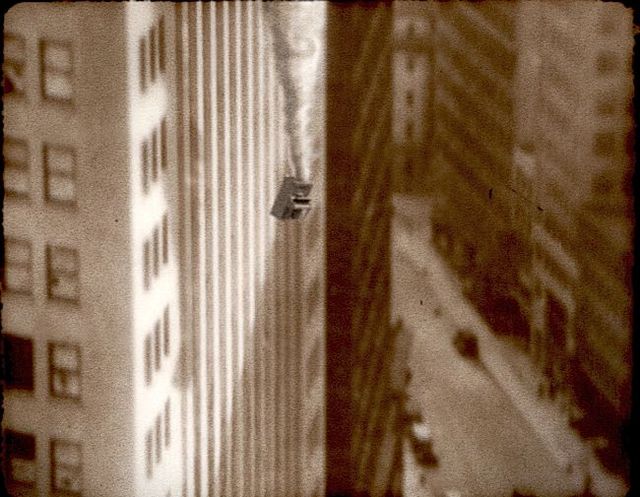
Because it is Friday (cue Dave Edmunds), this post, which started out in a state of decided disquiet (last night I dreamt about falling pianos and being swallowed alive by God's Great Fish), is guaranteed to end well.
Before dreaming, I had simply planned to collect and share a few unrelated, delightful and interesting (to me, at least) things with you today. Then when I woke (underneath the piano and inside the fish) at the usual palindromic hour of 3:33 am Eastern Standard Time, the first thing that came to mind was the news story I read yesterday about Britain's Got Talent (Jane likes it, but ugh!) singer Susan Boyle finally being given Lou Reed's permission to record the creepy song "Perfect Day" and filming a music video under the maestro's remote supervision (apparently, when you're a maestro, you can do that sort of thing) on beautiful Loch Lomond in Scotland.
Well, Ms. Boyle's rendition is just what you would expect (sort of pretty vocal histrionics) and the song is as much of a miss (as in "hit and miss") as it ever was. Loch Lomond is glorious, but would look better in person, without the blue optical filter set between the viewer and the Highlands.
I hope this is the last we hear of "Perfect Day" for a long, long time. As a Velvet Underground fan, I was happy for Lou Reed when he achieved success with his "Transformer" record, but at the same time could never pretend that it was his best work. Pop hits are unusual things -- lightning in a bottle, they always say -- and "A Walk On The Wild Side" captured listeners' imaginations so long ago, I think, because of Herbie Flower's insinuating bass guitar riff, the cool borrowed Nelson Algren title, the risque subject matter and the naughty words. Lou's ability to sustain and maintain a successful career in the face of uneven material and terrible live performance problems is a testament to how very good and original his best work is.
However, nothing could possibly justify the bizarre veneration extended to "Perfect Day" by the BBC in their very, very weird "Perfect Day" advertising campaign, culminating in the star-studded viewer appeal (keep paying that tv license fee; thank you very much) based on the song. Paraphrasing an old National Lampoon Radio Hour gag, it was a new low for both "rock" and "roll".
There are better "hands across the water" approaches to our UK neighbors than forcing a morbid, creepy lesser Lou Reed pop song on them. This book, by Wallis Warfield Simpson, which I recently found on the excellent, highly valuable Cookbook of the Day blogsite written by "Lucindaville" of West Virginia, is one of them. Considering the astronomical problems that the British caused Mrs. Simpson and vice versa, I think it was fine of her to share a valuable bit of her Southern U.S. hospitality and heritage with them, as she does in this very interesting, unusual (I've never seen anything like it), well-annotated recipe for:
The Duchess of Windsor's Pork Cake
1/2 pound fat salt pork, ground
3/4 cup boiling water
3/4 cup molasses
1/2 cup firmly packed brown sugar
2 cups raisins
1 cup currants, washed and dried
3 1/2 cups sifted flour
1 1/2 teaspoon baking soda
1 1/2 teaspoon cinammon
1 1/2 teaspoon cloves
1 1/2 teaspoon nutmeg
Place pork in a mixing bowl and add boiling water. Add molasses, brown sugar, raisins and currants and cool. Mix and sift the flour, baking soda and spices together three times. Add to the molasses mixture and beat until smooth. Turn into long narrow bar pan (10 X 4 X 3 inches) and bake in a slow oven (325F.) 1 hour and 15 minutes.
"Lucindaville" notes that : "Rarely does one find a cake recipe that begins with the '1 1/2 pound of fat salt pork'. Pork Cakes are a Southern invention -- you know in the South, when it comes to pork we eat everything but the squeal! Who knew we had such fine ideas for porky desserts? Pork Cake shows up in a few Southern cookbooks from the early 1900s, but doesn't seem to have caught on or survived. Such a cake is not mentioned in Mrs. Dull's Southern Cooking, considered to be one of the most comprehensive chronicles of Southern tradition. The recipe appears in Southern Living's encyclopedic Southern Heritage series culled from The Williamsburg Art of Cookery......the first American cookbook being printed at Williamsburg in 1742."
In a nice addition to better-known history, the Duchess herself also advises the reader that: "I have been very happy to help carry some of the well-known dishes of my native land to other countries, and especially to have served on my table Southern dishes which appeal to the Duke."
In other news, there's this:
Giant space bubbles baffle astronomers
Space Bubble Image (Source AFP)
"The two vast structures, stretching to the north and to the south of the centre of the Milky Way, are so big that a beam of light, travelling at 186,282 miles per second, would take 50,000 years to get from the edge of one to the edge of the other.
The previously unseen bubbles were discovered by astronomer Doug Finkbeiner, of the Harvard-Smithsonian Center for Astrophysics in Cambridge, Massachusetts, using NASA's Fermi Gamma-Ray Telescope. He admitted yesterday: 'We don't fully understand their nature or origin.'
They span more than half the visible sky, from the constellation of Virgo to the constellation of Grus, and are thought to be millions of years old. They were not noticed before because they were lost in a fog of gamma radiation across the sky.
Astronomers' best guess is that the bubbles were created by an eruption from a supersized black hole at the centre of our galaxy.
Mr Finkbeiner and his team discovered the bubbles by processing publicly available data from Fermi's Large Area Telescope. The space telescope, launched in 2008, is the most powerful detector of gamma rays, which are the most energetic form of light.
Scientist David Spergel, of Princeton University, New Jersey, said: 'In other galaxies, we see that starbursts can drive enormous gas outflows.
Whatever the energy source behind these huge bubbles may be, it is connected to many deep questions in astrophysics.'"
Artist's rendering of Black Hole
One person who would not lose sleep over the above story is Dave Davies, erstwhile lead guitarist, songwriter and singer for The Kinks, whose theories on metaphysics and extra-terrestrial life forms have aroused admiration and/or derision and sometimes ridicule in many who have followed his ultra-illustrious career. Personally, I'm fine with everything Dave says and does because he's unpretentious, funny and always unpredictable. It is true, however, that many years ago, while researching Dave's beliefs (he is an initiate of the Aetherius Society, an unusual spiritual community, and an acolyte of their founder "Sir" George King, a London taxi driver turned medium and guru) in the Samuel Weiser occult and spiritual bookstore in Greenwich Village, I encountered consistent dismissive (at best) looks from the staff when I told them what I was searching for. Because certain Aetherius publications consist of purported transcripts of interstellar transmissions from Jesus Christ across the lightwaves (in Aetherius terms, Jesus Christ was a Venusian warrior who once visited Earth to help us out), complete with static and other ham radio snap, crackle and popping, I suppose I can understand. I wear these incidents as something of a badge of honor. Freaking out the tolerant staff at Samuel Weiser wasn't an easy thing to do. (The books, by the way, did not appear to be big sellers.)
"Sir" George King broadcasting an interstellar "medium" transmission.
I think Dave looks great in the mid-1960s "Terylene" raincoat ad above -- cool and confident like Ina, the female model who holds her own with the man they called "The Rave". Here is a link to a song of Dave's that's not nearly well enough known. It is called "Dear Margaret" and it appeared as a bonus track on the Kinks' U.K. Jive lp. It's a very funny, crunching rock-y number and, for my money, is the outstanding contribution to the well-established genre of Anti-Margaret Thatcher rock songs.
Finally, here is a painting I like by the late "hard-edged abstractionist" Larry Zox called "Green Diamond Drill" (1968),
an image of a cupcake that Jane "fingerpainted" on her cellphone,
and a link to one of the most beautiful songs I know, "There's A Reward" by Joe Higgs, the man who taught the Wailers and the Wailing Souls harmony singing.
The piano had to fall. But I do get to climb out of the fish.
Wishing to add two locations to my list of places I would like to revisit but can't, I think immediately of Meson Botin and Darbar, two New York City restaurants where I spent a great deal of very happy time. I haven't been able to locate photographs of either place, but can see them in my mind and feel their presence daily and acutely.
Meson Botin was a Spanish restaurant on West 58th Street in Manhattan. Its story is similar to that of the legendary French restaurant, Le Pavillon, at Park Avenue and East 57th Street. Both restaurants sprang from national pavilion restaurants organized for the New York World's Fair (Le Pavillion from the French Pavilion at the 1938 World's Fair and Meson Botin from the 1964 fair's Spanish Pavilion), and both establishments influenced New York's culinary landscape by giving birth to additional restaurants in the city when members of their respective staffs eventually struck out on their own.
Because of the primacy of French cuisine in the culinary universe, Le Pavillion gained far greater renown, hosting during its heyday kings, queens, presidents, prime ministers, Kennedys, Onassises, and (naturally and inevitably) the Duke and Duchess of Windsor.
The Duke and Duchess of Windsor
Meson Botin lived a successful, but distinctly quieter, West Side existence on the block between Seventh Avenue and Broadway. It was more of a neighborhood place offering wonderful food and wine from all of Spain's provinces, privacy (if you desired it; it always seemed like it would be a good place to conduct a clandestine romance or conclude a secret business deal), or the excellent conversation of Pepe Russo, the owner, if you preferred company instead.
Botin was frequented by the rakish and raffish -- Spain aficionados of all sorts, members of the New York Bullfighters Club (who gathered there monthly for meetings), the owner's art clients (Pepe had an art business on the side; we once bought a charming painting of a girl holding a white cat from him that was painted by a formerly famous Broadway actress), and some quiet weirdos. Tourists regularly arrived demanding margaritas at the lovely bar, failing to realize that Spain is not Mexico (and vice versa), and Pepe obliged them by making the best margaritas ever served in New York.
What made Meson Botin Madrid in New York was its quiet, dignified authenticity. Years before tapas became an expensive fetishist affectation in Manhattan (missing the whole point of the cuisine and custom and denaturing this most natural way of dining), Pepe presented a fairly extensive, uniformly excellent, and reasonably priced tapas menu (in the bar only, as is proper). I think I miss his tortilla espanol and croquetas de jamon more than any two foods I've ever eaten. My favorite menu item, however, was Botin's stuffed peppers, always perfectly flavored and cooked, which were served in a glossy mahogany-colored sauce. This isn't a photograph of the dish as Botin prepared it (the photo, as you can see, shows red peppers), nor their genuine recipe. But this version from Penelope Casas' The Foods and Wines Of Spain is as close as I can manage and looks excellent.
Pimientos y Calabacines Rellenos (Stuffed Green Peppers and Zucchini)
2 tablespoons olive oil
2 large onions
3 cloves garlic
2 lbs. chopped beef or a mixture of beef, veal and pork
Salt
Freshly ground pepper
2 tablespoons minced parsely
2 tablespoons dry red wine
2 tablespoons minced cured ham
2 fresh tomatoes, skinned and chopped
3 medium zucchini
1/2 cup cooked short or long-grain rice
6 green peppers
3/4 cup tomato sauce, preferably homemade
Heat the oil in a skillet and saute the onion and garlic until the onion is wilted. Add the chopped meat and continue cooking, stirring frequently until the meat is lightly browned. Season with salt and pepper. Add the parsley, wine, tomato, ham and chopped tomato. Cut the zucchini in half crosswise and hollow them out, adding the flesh to the meat mixture and reserving the shells. Continue cooking this mixture for 5 minutes. Stir in the rice and cook 5 minutes more, uncovered. Cut off the caps of the green peppers (reserve them) and scoop out the seeds and the membrane.
Dilute the tomato sauce with 3/4 cup water. Season with salt and pepper. Pour into a baking dish. Stuff the zucchini and peppers about 3/4 full with the meat mixture. Close the peppers with the reserved caps. Arrange in the baking dish and bake at 350 degrees for about 1 hour, basting occasionally and adding more water as the sauce thickens. Serve with a light red wine such as Spanish Claret.
The Delhi Darbar of Akbar II by Ghulum Murtaza Khan, ca. 1813
We had a long, odd, but cozy relationship with the staff and owners of Darbar on West 56th Street, between Fifth and Sixth Avenues. The restaurant was adjacent to Caroline's EMI Records offices and it took us a while to try it out because, in an earlier incarnation, the space housed a place called Arthur's that featured singing and performing waiters looking for their big break. The only time we previously stopped in there for drinks, they tried to dragoon me into the floor show, which was embarrassing and horrible.
When we finally visited Darbar, we found that it was an Indian restaurant of uncommon refinement, excellence and elegance. We began coming for dinner fairly often, but mostly stopped by either for post-work drinks or for a light lunch of their palak shorba, a phenomenal spinach soup made especially distinctive by the inclusion of a small amount of cream (which I was given to understand was non-traditional) and a feathering of mustard oil across its surface. With some samosa, bhajia or one of their good flavored breads (their onion kulchawas sensational), it was the perfect light lunch.
Dave Davies
Because of its central Manhattan location, Darbar was extremely, if quietly, show-bizzy. David Letterman was often there with senior members of his staff. My personal all-time hero, Dave Davies of The Kinks was a regular, departing evening meals with a cheerful, friendly, incredibly high-pitched (think "Waterloo Sunset" and "Funny Face") farewell of "Tomorrow", announcing and promising his inevitable return. (Dave is a vegetarian and Indian cuisine is obviously paradise for those who never eat meat.)
As with the previous entry for Meson Botin, this is not Darbar's recipe for palak shorba, nor is it a picture from the restaurant. These, sadly, are lost to me. However, I visit Meson Botin and Darbar frequently in my dreams. I do wish Caroline and I could take Jane there so that she could know this part of us a little better. She knows so much already.
Blanch spinach leaves in boiling water for two to three minutes. Drain, refresh in cold water and puree them in a mixer. Heat olive oil in a deep pan. Add black cardamoms, cloves, cinammon and refined flour and saute for two to three minutes. Add ginger, garlic and onion and continue to saute for about five minutes. Add black peppercorns, bay leaves, salt, white pepper powder, roasted cumin powder and five cups of water. Stir and simmer for ten minutes stirring at intervals. Strain the stock. Add the spinach puree to the strained stock and mix well. Cook for four to five minutes. Serve hot with a little mustard oil drizzled over the top of each serving.